As Associate Dean for Teaching and Learning, Alex is chairing a curriculum review. He places a global skills report on the screen. Analytical thinking remains near the top. AI and big data are rising quickly. Resilience, flexibility and agility remain prominent, while leadership, curiosity and lifelong learning appear beside them.
The chart carries authority because it condenses a large amount of evidence into a form that senior teams can absorb quickly. It also generates urgency. Within minutes, the discussion shifts towards curriculum action: which programmes need more AI, where resilience should sit, whether analytical thinking belongs as a graduate attribute, a module outcome or an assessment criterion.
The room is already redesigning the curriculum before anyone has opened the labels.
That sequence matters because the report has genuinely done something valuable. It has gathered evidence across employers, workers, learners or countries and made a large pattern visible. Alex can see where attention is moving and where external pressure may be increasing. The ranking still cannot determine what his institution should mean by resilience, because emotional regulation under pressure, recovery after failure, adaptation when a plan collapses and persistence through difficulty describe related but distinct capability demands. Each would lead Sofia, the programme director working with Alex, towards different learning experiences and different evidence.
A ranking can therefore direct institutional attention while leaving the educational meaning unresolved. The quality of the curriculum decision depends on what happens after the signal arrives.
Global reach produces different kinds of evidence
The most influential global reports matter precisely because they can see beyond the boundaries of one institution. Their scale allows curriculum teams to compare local assumptions with patterns emerging across countries, employers or large learning populations.
The World Economic Forum’s Future of Jobs Report 2025 drew on more than 1,000 employers representing over 14 million workers across 55 economies. Employers expected 39 per cent of workers’ core skills to change by 2030. Analytical thinking remained the most frequently identified core skill, while AI and big data, networks and cybersecurity, and technological literacy appeared among the fastest-growing priorities (World Economic Forum, 2025). For Alex, this evidence offers an external view of anticipated workforce change and can expose areas that an inward-looking curriculum might otherwise underestimate.
The OECD’s Survey of Adult Skills performs a different analytical task. Its 2023 cycle assessed adults across literacy, numeracy and adaptive problem solving in 31 countries and economies. These constructs are bounded through explicit assessment frameworks and proficiency levels, allowing the OECD to examine measured performance and its relationship with education, employment and wider life outcomes (OECD, 2024). The strength of the evidence comes partly from the discipline imposed by measuring a limited number of capabilities under standardised conditions.
Coursera’s Global Skills Report 2025 looks through another window. It draws on the activity of more than 170 million registered learners on one global learning platform and reports learning and proficiency patterns across business, technology and data science using Coursera’s Skills Graph and learner data from 109 countries (Coursera, 2025). Its evidence reflects what people are learning and demonstrating inside a particular platform ecosystem, using the categories and content through which that ecosystem is organised.
The three reports all operate at global scale, yet scale does not make their evidence interchangeable. Employer expectations, standardised adult assessment and platform learning data observe different populations through different instruments and answer different questions. When their findings are placed together on one institutional slide, the methodological differences can disappear while the apparent agreement becomes stronger than the evidence warrants.
World Economic Forum
1,000+ employers, 55 economiesWho was asked
What employers expectWhat it shows
OECD
Adults in 31 countries and economiesWho was assessed
Performance on literacy, numeracy and adaptive problem solvingWhat it shows
Coursera
170 million registered learners on one platformWho was observed
Learning and proficiency patternsWhat it shows
A responsible curriculum review therefore needs to read scale alongside method. Large datasets widen the field of view, while the design of the study determines what that view can legitimately reveal.
Every ranking begins with a map of capability
A capability can enter a report only after someone has decided how it will be represented. The category may have been developed through extensive research, consultation and validation, yet the process still requires choices about labels, boundaries, groupings and levels of abstraction.
The World Economic Forum uses a Global Skills Taxonomy intended to support greater consistency across organisations and labour markets (World Economic Forum, 2021). Its ranked list includes analytical thinking; resilience, flexibility and agility; leadership and social influence; AI and big data; empathy and active listening; and environmental stewardship.
All of these items can contribute meaningfully to a question about workforce priorities. They do not describe capability at the same conceptual level. Analytical thinking points towards a foundational capacity. AI and big data may encompass technological practice, specialist knowledge and an entire field of professional activity. Empathy and active listening connect an emotional capacity with an observable practical action. Resilience, flexibility and agility compress several possible responses to challenge and change into one survey item.
Analytical thinking
A deeper cognitive capacity
AI and big data
Technological practice
Specialist knowledge
An entire professional field
Empathy and active listening
An emotional capacity
An observable practical action
Resilience, flexibility and agility
Several responses to challenge and change, in one survey item
The usefulness of the ranking therefore comes from its ability to organise employer attention at scale. Its taxonomy was not built to provide the full educational anatomy of every item it ranks.
Coursera makes different classification choices because its report supports a different environment. Business, technology and data science function as broad domains, communication appears as a competency, and writing can be represented as a more granular skill. That hierarchy makes sense for course organisation, learner assessment and platform analysis even though it differs from the structure a university might need for curriculum development.
The OECD narrows the field more deliberately. Literacy, numeracy and adaptive problem solving are specified deeply enough to support international assessment. Adaptive problem solving, for example, is defined around the capacity to pursue goals in dynamic situations where an immediately available solution method is absent. The level of definitional depth is possible because the survey concentrates on a bounded set of constructs rather than attempting to classify the full universe of human capability.
Every report therefore works inside a map created for its own purpose. The categories give the evidence meaning, but they also establish the limits within which the findings should be interpreted. Alex needs to understand that map before borrowing one of its labels for institutional use.
The institutional shortcut begins after the report is published
Global reports rarely claim to be ready-made curricula. The shortcut usually occurs inside the institution.
A capability rises in a ranking and quickly becomes a strategic priority. The priority travels through programme reviews, employability frameworks, assessment redesign and marketing language until an external signal has become a local promise to students. At each stage, the original label can acquire more educational authority without gaining greater conceptual precision.
AI illustrates the problem. A report may show that employers expect AI and big data to increase in importance, but Sofia still has to determine what students in a particular programme should actually learn. The answer may involve conceptual knowledge about how AI systems work, practical ability to use selected tools, analytical judgement when evaluating outputs, specialist technical capability to build systems or some combination shaped by the discipline and expected professional context.
Each of those choices creates a different curriculum. A business programme introducing AI-assisted market analysis needs a different capability architecture from a computer science programme teaching model development, even if both can legitimately cite the same external signal.
Knowledge Domain
Conceptual knowledge of how AI systems work
Technological Practical Skill
Practical ability to use particular tools
Analytical Capacity
Judgement in evaluating outputs
Specific Practical Skill
Specialist technical capability to build systems
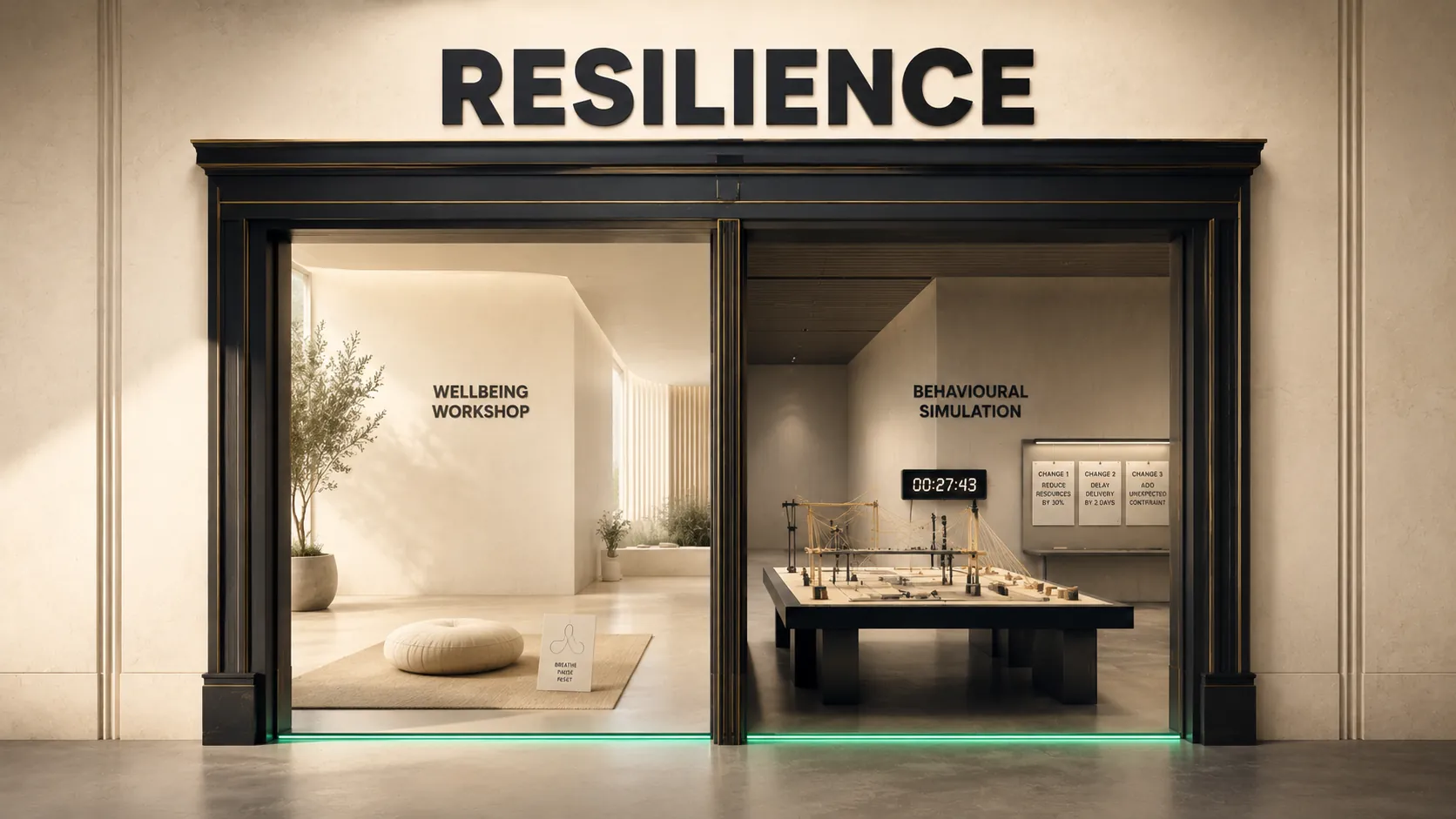
Resilience creates another form of ambiguity. A wellbeing session, a difficult client project, an outdoor challenge and a reflective assignment can all be described as contributing to resilience. They place students under different conditions, demand different responses and generate evidence of very different quality. The shared label therefore gives Sofia little guidance until the institution specifies which human capability it expects students to develop and how that development should become visible.
Analytical thinking can create an even subtler shortcut because it already sounds educational. Sofia can attach the term to case studies, essays, data exercises and examinations without specifying which analytical capacities students are expected to activate, how performance should become more sophisticated over time or how evidence from one task supports claims beyond that task.
At this stage the external report has completed its function by signalling an area worthy of attention. The unresolved work belongs to the institution: translating that signal into a capability precise enough to support curriculum, assessment and later signalling.
A ranking cannot perform capability design
Priority rankings answer questions about relative attention. Curriculum design requires a different level of specification because educators must decide what students are expected to understand, perform or progressively develop.
That work requires questions about the nature of the capability, the knowledge and action involved, the standard of performance expected, the experiences through which development can occur and the evidence that could justify a claim. The ranking position contributes no direct answer to those questions.
Voogt and Pareja Roblin’s comparison of international frameworks for twenty-first-century competences found substantial agreement around several important capabilities alongside meaningful differences in definition, implementation and assessment (Voogt and Pareja Roblin, 2012). Joynes, Rossignoli and Amonoo-Kuofi (2019) similarly identified overlapping terminology and weak operational clarity across the field. Agreement around importance therefore gives Alex a strong reason to investigate a capability while leaving Sofia with substantial design work before that capability can become an educational commitment.
The problem becomes especially visible when a ranked list combines different layers of human capability. A report can legitimately place technological practice, domain knowledge, analytical capacity, emotional capacity and social action beside one another because all may be relevant to workforce change. Curriculum design has to recover the distinctions that the ranking did not need to foreground.
Within the Unified Skills Map, Knowledge Domains organise structured understanding used to interpret situations. Practical Skills describe what a person can do in concrete contexts. Generative Skills capture the analytical, creative and emotional capacities that power learning, development and adaptation. These categories interact continuously in real performance, but the differences between them shape how education should approach development and evidence.
A Knowledge Domain may require explanation, inquiry and opportunities for application. Practical Skills need performance, feedback and repeated practice under relevant conditions. Generative Skills strengthen through repeated activation across varied experiences and remain active as students learn, reason, create, regulate themselves and adapt. When a broad external label combines several of these realities, the curriculum team has to separate them sufficiently to know what it is actually promising.
The Unified Skills Map helps institutions open the label
HELFFE created the Unified Skills Map to provide a capability architecture through which external priorities can be interpreted before they become local commitments. The reports remain valuable because they offer demand intelligence, reveal shifting priorities and direct attention towards areas worthy of institutional investigation.
The Unified Skills Map takes the reported label and examines the human capabilities contained within it. A broad priority may resolve into one capability, several connected capabilities or an entire field of activity requiring different forms of knowledge and action.
AI, for example, may involve Knowledge Domains that explain how relevant systems operate, Technological Practical Skills for using tools effectively and Analytical Capacity for evaluating outputs, assumptions and consequences. Leadership may draw on General Practical Skills such as communication, coordination or decision-making, contextual knowledge about the organisation and Emotional Capacity when relationships, pressure and conflict shape the situation. Resilience requires similar clarification because the educational claim depends on which actions and capacities the institution intends to develop and observe.
That translation allows Alex to decide what the institution is prepared to promise. Sofia can then design learning experiences around a defined capability rather than around the prestige of the external label. Assessment can collect evidence proportionate to the claim, and students can understand what the priority means in terms of their own development.
The external signal remains part of the decision. Capability architecture provides the educational precision required to act on it responsibly.
Read the method before borrowing the conclusion
Global reports deserve careful use because their authority can encourage institutions to borrow the conclusion faster than they examine the evidence that produced it. Responsible interpretation begins with who was studied, what was measured, how the categories were constructed and which claims the method can support.
Employer surveys reveal expectations and perceptions among the participating organisations. Platform data reveal behaviour and performance among users working inside the content, assessment and taxonomy of that platform. International assessments achieve comparability through carefully bounded constructs and controlled testing conditions. Each method generates useful evidence by defining what enters the frame and what remains outside it.
What every curriculum should contain
Employer survey
Employer expectations and perceptions
Platform report
Behaviour of that platform’s users, within its content and categories
International assessment
Comparable results on a narrow set of constructs
Those boundaries become important when a report is used for purposes beyond its original design. A workforce forecast can justify closer investigation of an emerging area without establishing that every programme needs the same learning outcome. A platform report can reveal rapid learner activity in a technological domain without proving equal urgency across every industry, country or student population. An international assessment can identify weakness in adaptive problem solving while leaving universities to determine which disciplinary experiences could strengthen the relevant capability in their own context.
Methodological discipline protects the institution from converting an external signal into internal theatre. A reference in a strategy document carries little value if the programme team cannot explain why the evidence applies to its students, which capability is involved and how the curriculum response follows from that interpretation.
From external signal to educational commitment
Global skills reports belong inside serious employability strategy because they widen institutional attention, challenge local assumptions and reveal areas in which workforce demand may be shifting. Their greatest value appears when the ranking initiates disciplined inquiry rather than becoming the architecture that closes it.
Alex can use a report to identify where the institution should look more closely. The next stage belongs to capability definition: understanding what the label contains, determining which parts matter for the programme and establishing how those capabilities should develop and become observable. Only after that work should the priority enter curriculum promises, assessment criteria or student-facing claims.
This sequence also protects the report from being asked to perform a task outside its design. A global ranking can identify demand patterns across employers, countries or learners. Educational institutions remain responsible for translating those patterns into specific learning and development decisions that make sense for their disciplines, students and professional contexts.
The question behind every ranked skill is therefore operational as much as conceptual: what exactly did the report define, what evidence supports its priority, and what will our students actually be expected to develop because of it?